Why Adults Stop Playing (and How Improv Helps You Rediscover It)

Dr. Tara Alexander, therapist and longtime Peak Improv Theater student, believes play is one of the most powerful tools for growth.
Why Adults Need Play—and How Improv Helps
Many adults stop playing because they believe play is childish or unproductive. Play is important for adults because it improves creativity, emotional regulation, collaboration, and resilience in adulthood and everyday life. Activities like improv helps adults rediscover the benefits of play by creating a low-stakes environment where mistakes are welcome and collaboration replaces pressure. At Peak Improv Theater, students discover that play isn’t a waste of time—it’s one of the fastest ways to reduce stress, connect with others, and grow.
Play is essential for adult well-being. As children, play is built into daily life. But as adults, many of us stop playing because we associate play with being unproductive or childish. Work, responsibilities, and performance expectations slowly replace curiosity and experimentation. The result is that many adults lose one of the most powerful tools for creativity, resilience, and connection.
That’s where improv becomes so powerful—it gives adults structured permission to play again. Improv is especially effective because it combines play, collaboration, and spontaneity, helping adults practice communication and resilience in a supportive environment.
Dr. Tara Alexander is a therapist and licensed clinical social worker with thirty-three years of experience. She’s also a longtime Peak Improv Theater student, community member, and host of the Speak Up! improvisational workshops designed to improve communication skills.
I spoke with her about how improv improves your life—especially when it comes to play. This month, we’re taking a deeper look at how every improv, stand-up, and musical class we offer builds skills that support play, conflict resolution, and effective communication.
Dr. Tara and I met at Third Space, a bustling coffee shop near her office. The first thing we agreed on is that you don’t have to be funny, you just have to give yourself permission to play.
“Play is how we move forward when we’re stuck,” says Dr. Tara. “Play is how we learn and grow.”
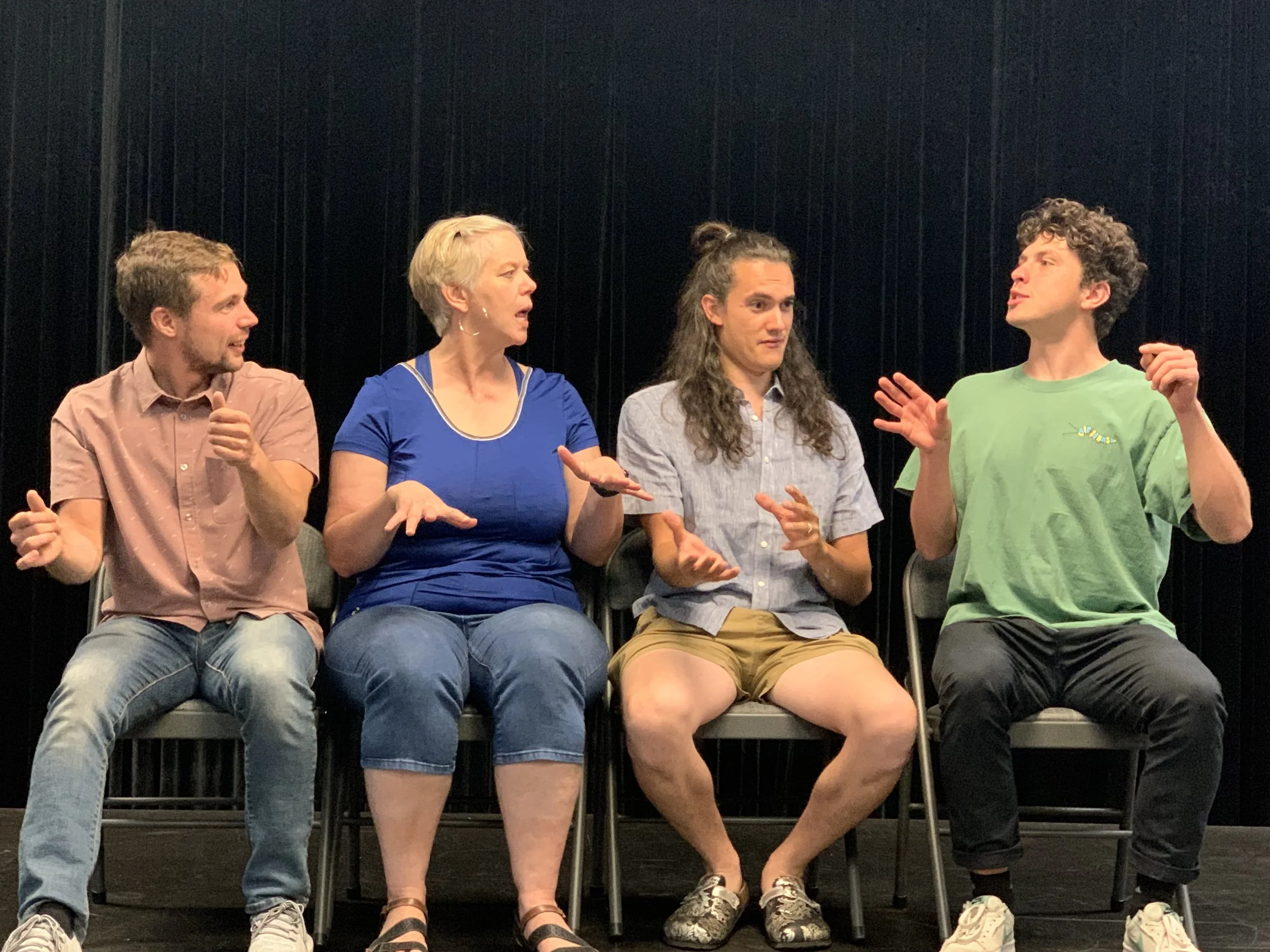
Dr. Tara in an improv class where a low-stakes environment enables students to practice listening, collaboration, and communication.
From fear of making mistakes, stage fright, social anxiety, self-doubt, and the pressure to be perfect, to the worry of not being funny or looking bad, improv invites you to play—and that’s not only fun, it’s restorative.
Play includes activities that don’t have stakes, expectations, or key performance indicators. In fact, many students discover that improv strengthens their confidence, communication skills, and sense of belonging, both on and off stage.
“The problem is, adults think play is juvenile, or a waste of time,” Dr. Tara says. “But science proves it’s the opposite.”
Therapists increasingly recognize improv as a tool for building communication skills. Because improvisation requires listening, responding in the moment, and accepting mistakes, it naturally builds the same skills used in healthy conversations and conflict resolution.
The Benefits of Play for Adults
Research cited by CEO Magazine suggests that play strengthens working relationships and supports emotional regulation—both essential for strong communication and collaboration.
Play reduces stress and burnout, recharges brain power, boosts creativity and innovation, improves collaboration, and increases motivation.

Peak Improv Theater’s shows and jams give students a chance to practice their skills in a supportive community.
The beautiful thing about Peak Improv Theater in Colorado Springs is that you don’t have to believe in improv’s benefits before you try it. Most people walk in thinking they’re “not funny enough,” only to discover the real point isn’t comedy—it’s play. And once you experience that kind of playful freedom in a room full of supportive people, it’s hard not to want to come back.
Our Sunday Improv 101 class begins March 8, and there are still a few spots left. Use code BLOG15 and save $15.
Try a free Improv 101 drop-in class and see what it’s like before committing.
Watch our family-friendly Stick Horses show, every first Friday.
Frequently Asked Questions About Improv and Play
Do you have to be funny to try improv?
Not at all. Improv isn’t about telling jokes—it’s about listening, responding, and playing with ideas. Many students join improv classes because they want to build confidence, connect with others, or simply try something new in a supportive environment.
How does improv help with communication?
Improv teaches people to listen carefully, respond in the moment, and accept mistakes without judgment. These same skills are essential for healthy conversations, conflict resolution, and collaboration in everyday life.
Is improv stressful for beginners?
Most beginners feel nervous at first, but improv classes are designed to be low-stakes and welcoming. Instructors focus on creating a supportive environment where mistakes are encouraged as part of learning and play.
What’s the easiest way to try improv?
Many people start with a beginner improv class or attend a free improv jam night to see what it’s like. Watching a live improv show can also be a fun way to experience the creativity and spontaneity of improv.
Can improv help with social anxiety?
Many people join improv classes to build confidence and practice speaking in front of others. Because improv encourages listening, collaboration, and accepting mistakes, it can help people feel more comfortable expressing themselves in social situations.
Thanks for reading. Until next time—keep saying yes, keep showing up, and if you’re curious what improv feels like, come play with us at a class, jam, or show. We’d love to see you on (or off) the stage.